
A Walk of Wonder, Whimsy and Witnessing
A walk that stays with you, led by a psychologist
Let the streets of Amsterdam be a mirror to your inner life and help you practice the art of noticing things you haven’t before
Most of us rush through our neighbourhoods - and our lives - while rarely seeing them. We follow the same routes, carry the same preoccupations, and miss the gnomes winking at us from the heights, the changing reflection of light on the canals, the words carved into ordinary doorways. Just like we miss the quieter signals from within: the whispers of what’s actually important to us and not someone else, the pull towards something that we can’t put into words yet, the vague restlessness that’s searching for release.
This walk doesn't ask you to meditate in a studio or journal at a desk. It’s also not a regular touristic tour.
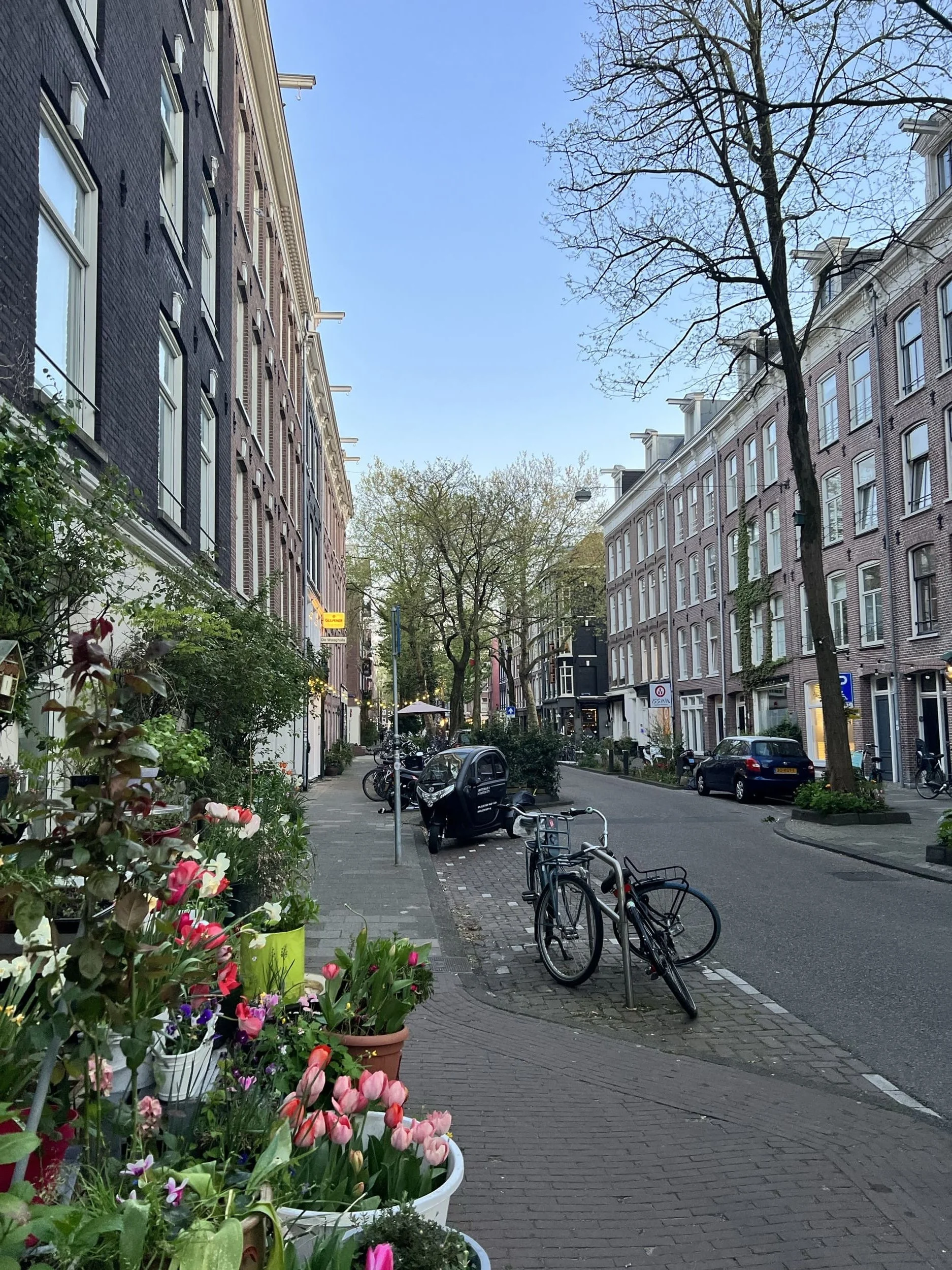
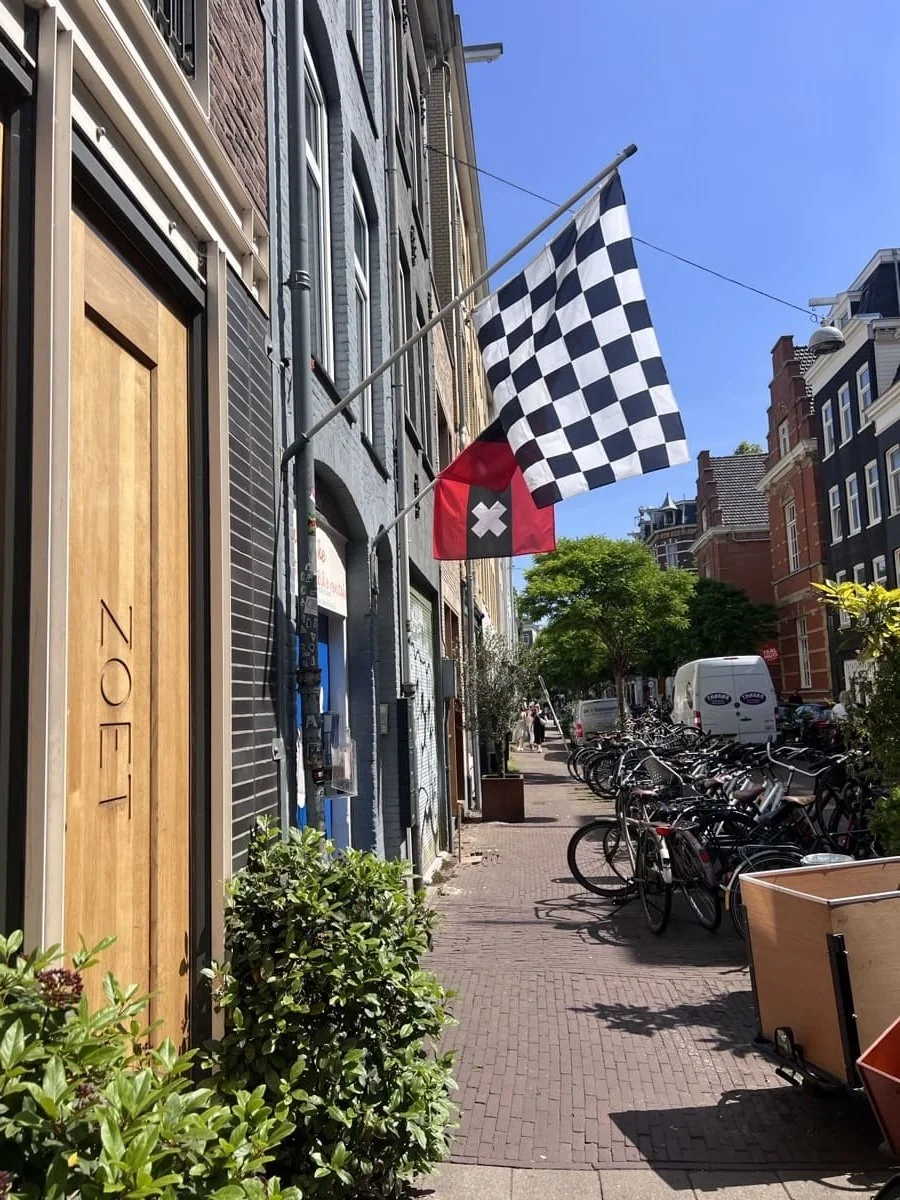
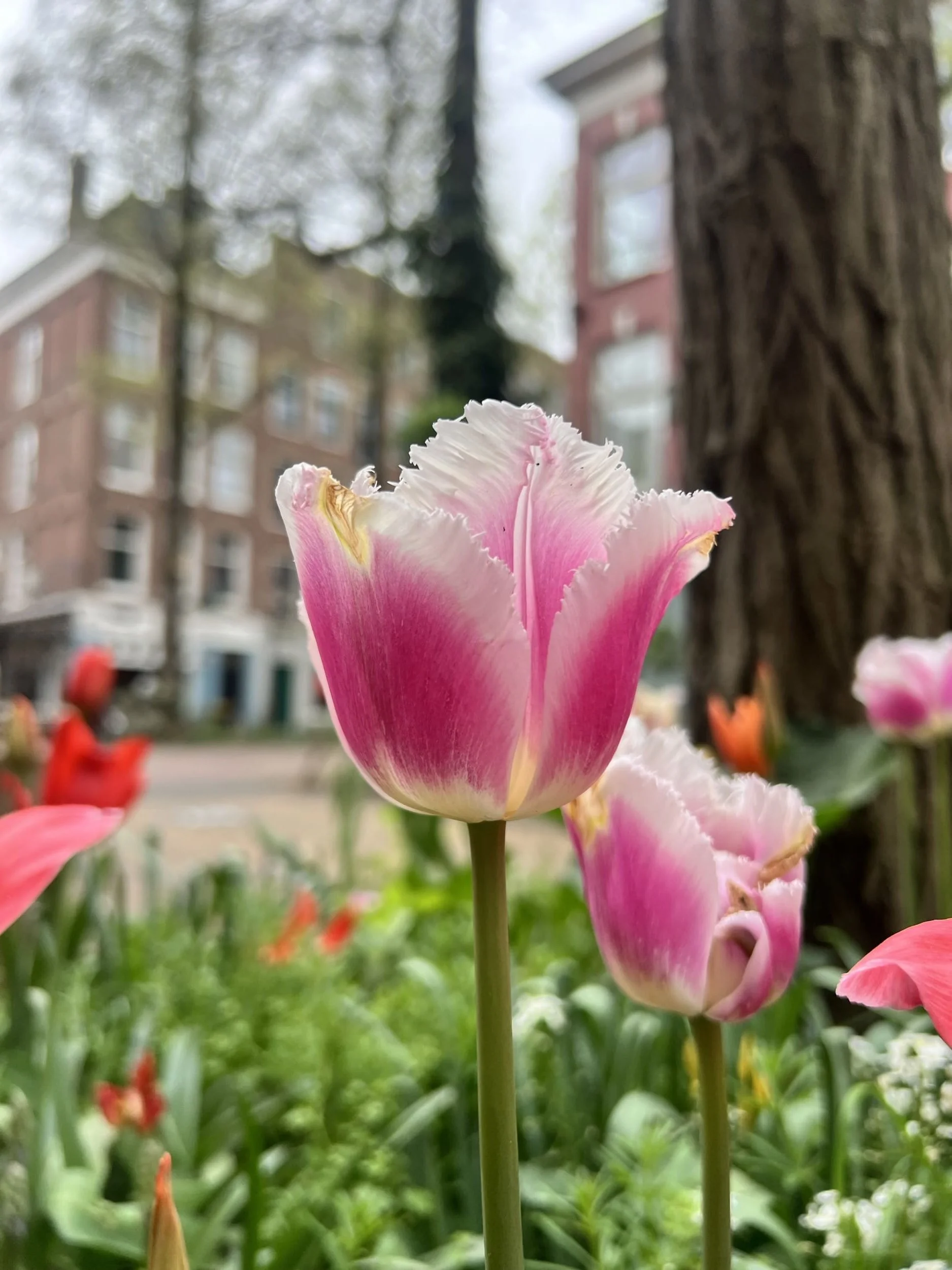
Instead, it uses Amsterdam’s De Pijp neighbourhood - its whimsical details, its community-tended bursts of colourful flowers, its century-old architecture built as a love letter to the working class - as the stage to an inner journey. You get to slow down, and practice noticing. You get to witness the beauty of the world around you, and be witnessed by a small and intimate group of others walking alongside you.
Led by a psychologist and art therapy facilitator, each carefully chosen stop carries both an outer invitation (to look, to wonder) and an inner one (to reflect, to recognise). Come as you are, notice what you notice. Open yourself to being delighted and surprised, supported and seen.
What we’ll do
We'll move slowly as a group through some of De Pijp's quieter streets, pausing at five stops - each chosen for what it holds, and what it might reflect back to you.
As we walk and linger, I’ll help you look closely at things most people walk past. And in between, we'll turn the same quality of attention inward, noticing what comes up.
With gentle guidance, expect to feel more present than you have been in a while, and to leave with a renewed appreciation - for the world around you, and for yourself.
participants
max 8
language
English
duration
90 mins
personal sharing
optional
Why it works
The science and the wisdom behind it
I created this experience out of my love for this part of Amsterdam combined with a deep desire to help you connect - with the world around you, with others, with yourself. But there is a growing body of evidence supporting why experiences like this one work. Here is some of it.
Novelty
The brain is wired to stop registering things it has seen before. That has its benefits, but it can also easily make us feel like we’re stuck in a rut, repeating the same day over and over again, without much joy or excitement. The solution doesn't require big life changes. It just requires a different way of directing our focus, resulting in a greater sense of aliveness and presence.
The research
Novelty activates the dopaminergic reward system, increasing motivation, memory encoding, and positive affect. Research on seeing the familiar with new eyes shows it reliably disrupts habitual thinking patterns and opens new cognitive and emotional perspectives.
Awe
Awe is defined as the feeling of being in the presence of something vast that transcends our current understanding of the world, the feeling of things being bigger than us, which often has a liberating effect. We all experience awe, although most of us don’t go looking for it intentionally, making it an untapped resource. It can be found in our everyday life, if we make space for it.
The research
Largely led by Dacher Keltner, research on regular awe walks suggests reduced daily stress, increased compassion, and, interestingly, a growth of capacity for awe over time. Unlike most pleasures, awe doesn't seem to habituate. The more you practise it, the more available it becomes.
Attention restoration
Most of us spend our days in directed attention - the effortful, draining kind of focus required by screens, decisions, and deadlines. What restores it isn't just regular rest, exactly. It's soft fascination: the kind of effortless attention that doesn’t demand anything from us. Flowers, water, and unexpected details naturally invite this type of soft fascination, even in urban settings.
The research
Kaplan & Kaplan's Attention Restoration Theory shows that natural and softly fascinating environments restore depleted cognitive resources. Studies find measurable improvements in mood, focus, and mental clarity after even brief exposure - sometimes within minutes.
Witnessing
The combination of witnessing and being witnessed fulfils one of our basic, yet often sorely neglected, human needs - to be seen, to have our inner experience (what we notice, what moves us) received by others without judgement or advice. Walking together creates the conditions for it naturally, with gentle guidance helping everyone share only as much as they really want.
The research
Witnessing activates neural pathways that reduce threat response and increase openness to experience. Research shows that sharing positive experiences with others doesn't just feel good; it deepens the memory, strengthens the meaning, and builds connection even between strangers.

Hi, I’m Eva.
A psychologist and trained art therapy facilitator based in Amsterdam, living here joyfully with my husband and two young kids.
Through all the different work I’ve done over the course of the past 9 years as a self-employed psychologist, there’s been a common thread - I love to help others bring more meaning and joy to their lives. And I love to use creative, somewhat unexpected ways of doing so, allowing for the element of playfulness and imagination to work its magic.
I offer group workshops and individual sessions, designed to be accessible to anyone regardless of creative background. My approach draws on art therapy, psychology, and Acceptance & Commitment Therapy (ACT) - but in practice, whatever the form, it mostly feels like a warm, guided space to pause, explore and find answers from within.
Frequently Asked Questions
-
Part of the practice of noticing is arriving without a script. What I can tell you is that every stop has been chosen carefully, and that this experience of De Pijp will surprise you even if you've lived here for years.
To help you with the logistics, here are our starting and ending points:
START: Brandweerbrug
END: Cooperatiehof
The whole experience will take about 90 minutes. -
Maximum 8 participants.
-
The walk is done in English.
There’s an option of booking private tours in Croatian/Serbian/Bosnian.
-
None at all. You just need to be able to walk for about an hour and be willing to look around and within.
-
I respect everyone’s comfort levels. The invitation to share is always an option, never a must.
-
Amsterdam’s moody weather and rain is part of Amsterdam. The walk happens in most weather, as “bad” weather can even be helpful in practicing noticing and staying present in less than ideal conditions.
I encourage you to check the weather forecast and dress for it.
If the weather is really bad and I postpone the walk, you can join at a later time or get a refund.